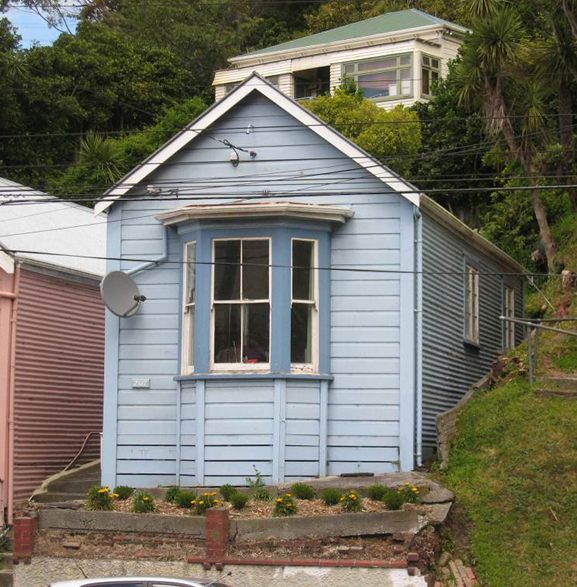
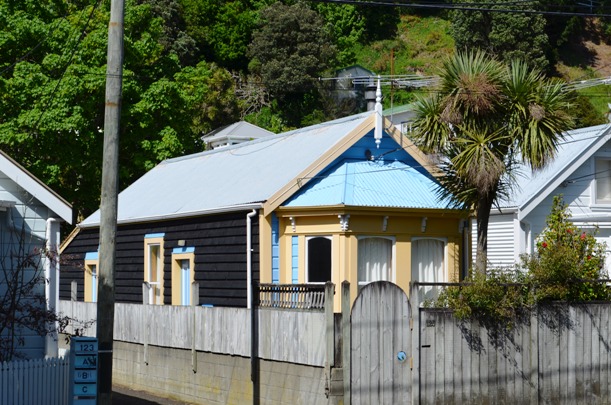
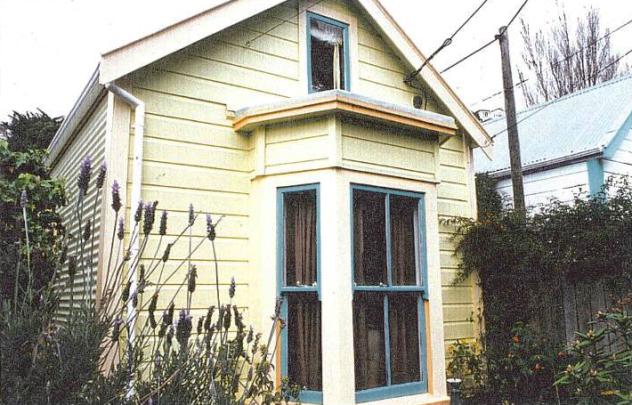
The house at 205 Aro Street is an important representative and authentic example of a modest workers’ cottage. Simple in its materials and design, it makes good use of a restricted site. Little exterior change means it has retained its architectural values and makes an important contribution to the wider historic landscape of workers’ cottages and larger villas that line Wellington’s Aro Street.
The houses at 205 & 207 were built by George Baker, a well-known builder and developer in Wellington, circa 1897. Baker was responsible for a number of developments in Mount Victoria and Te Aro, including the twin cottages located at 125 & 127 Aro Street.
Title to Lot 44 DP 710 was in the name of George’s son William George Baker, a noted landscape artist. The property was subdivided and the title to part of Lot 44 was transferred to Thomas Lavin, a cook, in 1924 (207 Aro Street) and the other part of Lot 44 was transferred to his wife, Susan Lavin, in 1927 (205 Aro Street). Thomas and Susan lived at 205 Aro Street; Thomas passed away in 1928 and Susan transferred the property in 1935. The land was transferred a number of times over the years to a carpenter, labourer and scrap buyer before it was gazetted for university purposes in 1975.
The house is an intact and representative example of a type of housing that dominated New Zealand construction. Designed and built by builders, the materials of native timber and corrugated iron were accessible, cheap and provided flexibility for future alterations or additions. Jeremy Salmond writes that “… the little wooden cottage of one or two rooms, with a central door and a window either side of the door, remained the basic unit of ordinary house design throughout the nineteenth century. In colonial New Zealand wealth, not class, decided how people were housed.”
The house at 205 Aro Street has historic, architectural, and aesthetic values. The house continues to serve a residential purpose and its form and structure adds to our understanding of how people lived at the turn of the twentieth century; the social and economic level of the residents being reflected in this small single-gabled house with a lean-to at the rear.
The houses at 205 & 207 were built by George Baker, a well-known builder and developer in Wellington, circa 1897. Baker was responsible for a number of developments in Mount Victoria and Te Aro, including the twin cottages located at 125 & 127 Aro Street.
Title to Lot 44 DP 710 was in the name of George’s son William George Baker, a noted landscape artist. The property was subdivided and the title to part of Lot 44 was transferred to Thomas Lavin, a cook, in 1924 (207 Aro Street) and the other part of Lot 44 was transferred to his wife, Susan Lavin, in 1927 (205 Aro Street). Thomas and Susan lived at 205 Aro Street; Thomas passed away in 1928 and Susan transferred the property in 1935. The land was transferred a number of times over the years to a carpenter, labourer and scrap buyer before it was gazetted for university purposes in 1975.
The house is an intact and representative example of a type of housing that dominated New Zealand construction. Designed and built by builders, the materials of native timber and corrugated iron were accessible, cheap and provided flexibility for future alterations or additions. Jeremy Salmond writes that “… the little wooden cottage of one or two rooms, with a central door and a window either side of the door, remained the basic unit of ordinary house design throughout the nineteenth century. In colonial New Zealand wealth, not class, decided how people were housed.”
The house at 205 Aro Street has historic, architectural, and aesthetic values. The house continues to serve a residential purpose and its form and structure adds to our understanding of how people lived at the turn of the twentieth century; the social and economic level of the residents being reflected in this small single-gabled house with a lean-to at the rear.
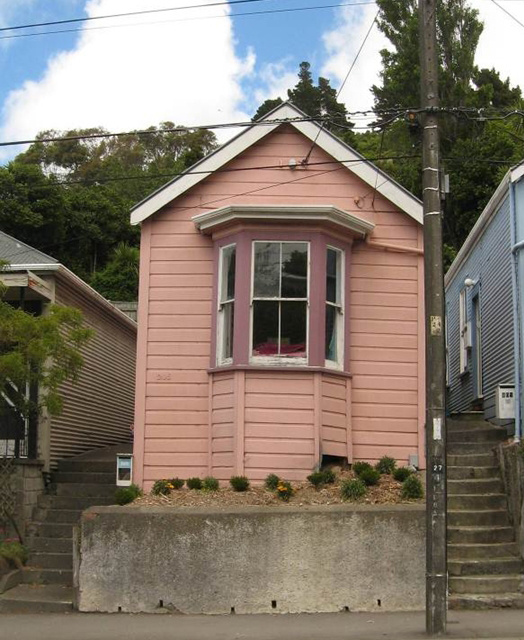
House | Natasha Naus | 15/11/2012 | Heritage New Zealand Pouhere Taonga
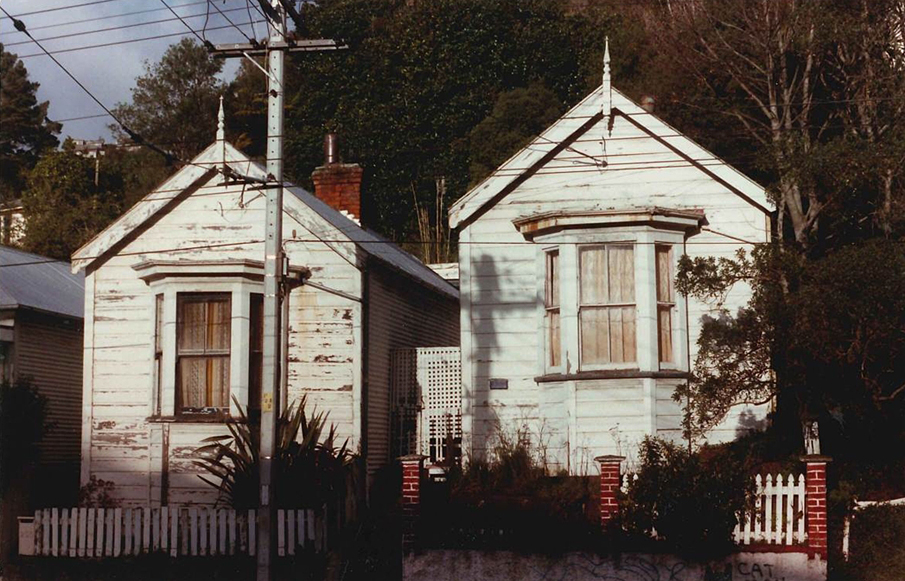
House. 1985. 205 (left) and 207 (right) Aro Street. From NZHPT BCC Record Form 4120 | C Cochran | Heritage New Zealand Pouhere Taonga
House | Natasha Naus | 15/11/2012 | Heritage New Zealand Pouhere Taonga
House. 1985. 205 (left) and 207 (right) Aro Street. From NZHPT BCC Record Form 4120 | C Cochran | Heritage New Zealand Pouhere Taonga